
- All
- Product Name
- Product Keyword
- Product Model
- Product Summary
- Product Description
- Multi Field Search
Views: 0 Author: Site Editor Publish Time: 2026-07-02 Origin: Site
Dried noodles sit quietly on pantry shelves around the world, yet they represent one of the most globally traded food staples in existence. From a quick weeknight dinner to restaurant-scale production, the demand for high-quality dried noodles has never been stronger. Buyers — whether they run a grocery chain, a restaurant group, or an e-commerce food brand — are increasingly turning to noodles factory wholesale channels to secure reliable supply at scale.
But not all dried noodles are created equal. The manufacturer behind the product determines everything: the flour quality, the drying method, the texture in the bowl, and the shelf life on the shelf. Understanding what separates a professional noodles manufacturer from a generic supplier can save buyers from costly sourcing mistakes.
This guide covers the essentials of dried noodles, what to look for in a noodles manufacturer, and how noodles factory wholesale procurement works in practice.
Dried noodles are produced by mixing wheat flour with water (and sometimes egg or alkaline salts), shaping the dough into strands, and removing moisture through a controlled drying process. The result is a stable product with a long shelf life — typically 12 to 24 months — that rehydrates cleanly when cooked.
Quality matters at every stage of this process. The protein content of the wheat flour directly affects the chewiness and elasticity of the finished noodle. Drying temperature and airflow control determine whether the noodle cracks, warps, or holds its shape during packaging and transit. Even the water ratio during mixing affects the final texture.
For end consumers, a well-made dried noodle has a smooth surface, consistent strand thickness, a clean bite after cooking, and no floury residue in the pot. For wholesale buyers, quality also means batch-to-batch consistency — the same texture and appearance across every carton in every shipment.
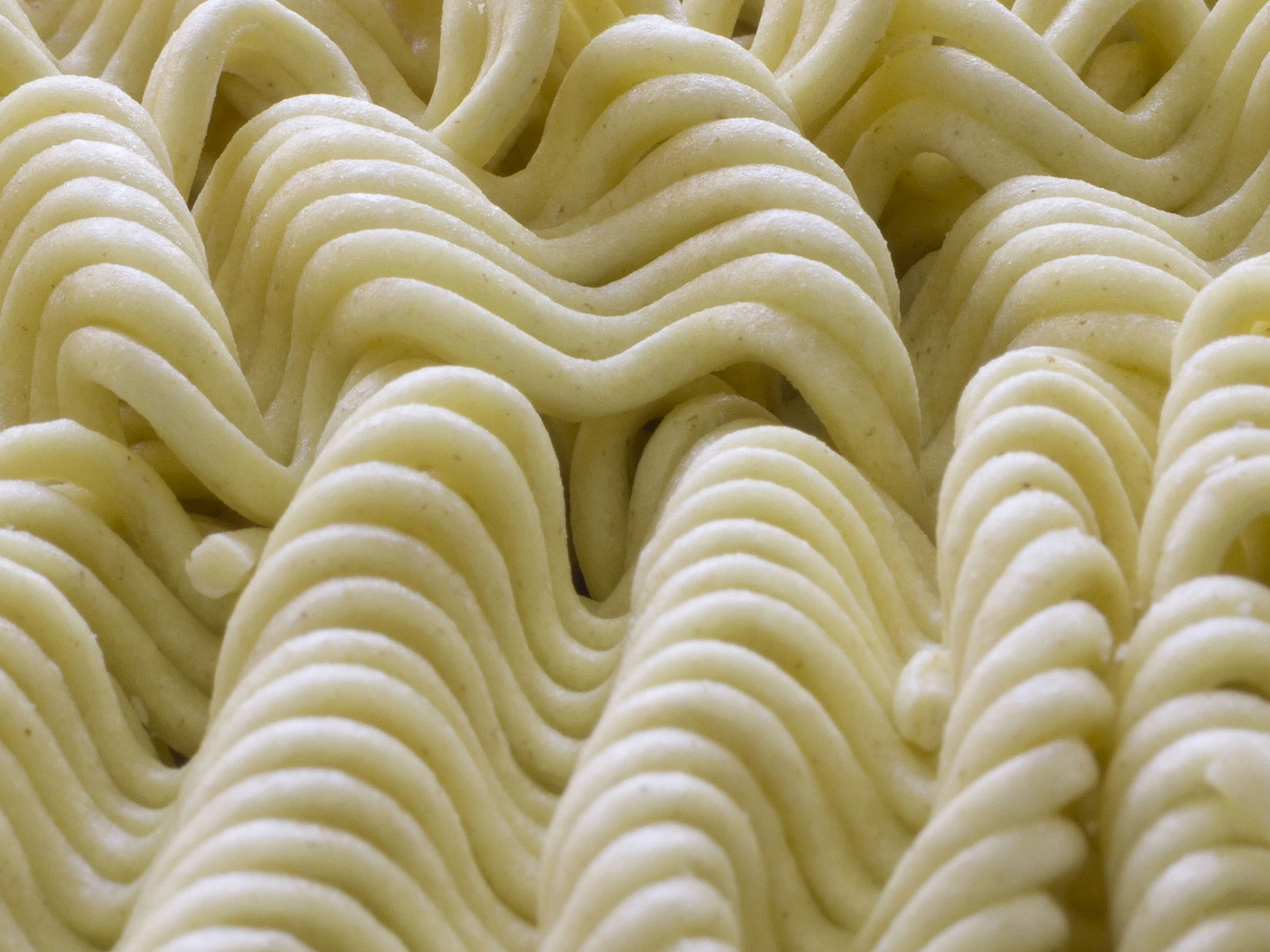
Choosing the right noodles manufacturer is the single most important decision a buyer makes when entering the dried noodles market. Several criteria separate dependable manufacturers from unreliable ones.
Production technology and capacity are the foundation. A serious manufacturer operates precision production lines that automate mixing, sheeting, cutting, and drying. Jiangmen Liji Food Co., Ltd., for example, operates more than 10 precision production lines across a facility covering over 10,000 square meters, enabling large-volume fulfillment without compromising consistency.
Technical expertise determines how well a manufacturer can adapt to custom requirements. Buyers often need specific noodle widths, flavors, packaging formats, or formulations for dietary requirements. A manufacturer with a dedicated R&D and technical team can accommodate these specifications rather than forcing buyers into a one-size-fits-all catalog.
Quality assurance is non-negotiable for export-oriented buyers. Look for manufacturers whose products are backed by legal test reports and comply with international health and safety standards. Liji Noodles, based in Jiangmen, Guangdong Province, implements strict quality control throughout production and inspection, ensuring every batch meets global regulatory requirements.
Packaging capabilities round out the picture. Professional manufacturers offer multiple packaging formats to suit different retail and foodservice channels.
Packaging Format | Best Suited For | Typical Use Case |
|---|---|---|
Bag Pack Noodles | Retail supermarkets | Consumer household purchase |
Box Pack Noodles | Premium retail and gifting | Branded or seasonal product lines |
Carton Pack Noodles | Bulk foodservice supply | Restaurants, catering, institutional buyers |
Individual Pack Noodles | Convenience retail and e-commerce | Single-serve or on-the-go formats |
Noodles factory wholesale procurement differs from retail buying in scale, lead times, and commercial terms. Understanding the process helps buyers plan more effectively and avoid delays.
Minimum order quantities (MOQs) vary by manufacturer and product type. Factories with high-volume production lines — like those at Liji Noodles — can offer competitive pricing on large orders because their cost per unit drops significantly at scale. Buyers should clarify MOQs early in negotiations to ensure the factory's minimums align with their distribution capacity.
Lead times typically range from two to four weeks for standard product lines, and longer for custom formulations or specialty packaging. Building buffer time into procurement cycles prevents stockouts, particularly for buyers managing seasonal demand spikes.
Sample evaluation should always precede a full wholesale order. Request production samples — not just specification sheets — and cook-test them under real conditions. Pay attention to the noodle's behavior in boiling water: how quickly it rehydrates, whether it clumps, and how well it holds texture over a few minutes of cooking.
Logistics and export documentation are areas where experienced manufacturers add clear value. A factory with established export channels will have familiarity with customs documentation, HS codes for dried noodles, and international shipping requirements — reducing the administrative burden on the buyer's side.
Buyers sourcing from Liji Noodles can contact the team directly at cocochen@gdlijifood.com or via WhatsApp at +86 13143141923, with the factory located at Workshop, No. 145, Gaoxin West Road, Jianghai District, Jiangmen City.
Different markets have different preferences, and a knowledgeable noodles manufacturer will help buyers match product specifications to end-consumer expectations.
Wheat noodles are the broadest category — neutral enough to pair with broths, sauces, and stir-fries across Asian, European, and Middle Eastern cuisines. Non-fried noodles appeal to health-conscious consumers who associate fried instant noodles with excess oil. Egg noodles carry a richer flavor and a yellower color that suits certain regional cuisines and premium product positioning.
For buyers entering new markets, it pays to research the dominant cooking methods in the target region. A noodle optimized for long-simmered soups performs differently from one designed for quick stir-frying. Liji Noodles produces a range designed for elasticity and toughness, suitable for marinades, soups, and stir-fried preparations alike.

Dried noodles are a stable, scalable product category with consistent global demand. The key to sourcing them well is selecting a noodles manufacturer with the production capacity, technical expertise, and quality controls to deliver reliably at volume.
Noodles factory wholesale channels offer the best combination of price efficiency and supply security — provided buyers do the upfront work of vetting manufacturers, requesting samples, and clarifying commercial terms before placing large orders. Jiangmen Liji Food Co., Ltd. (www.lijinoodles.com) offers a full range of dried noodles across multiple packaging formats, backed by a senior technical team and strict quality assurance protocols, making it a strong starting point for buyers seeking a dependable wholesale noodles partner.
What is the difference between dried noodles and instant noodles?
Dried noodles are air-dried or heat-dried without frying, and they require a few minutes of boiling to cook. Instant noodles are typically pre-cooked and fried, which allows for faster rehydration but adds oil content. Non-fried dried noodles are generally preferred by buyers targeting health-conscious consumers.
What should buyers check before placing a noodles factory wholesale order?
Buyers should verify the manufacturer's quality certifications and test reports, request physical product samples for cook-testing, confirm minimum order quantities, clarify lead times and packaging options, and review the factory's export documentation capabilities.
How long do dried noodles last?
Most dried noodles have a shelf life of 12 to 24 months when stored in a cool, dry environment away from direct sunlight. Shelf life depends on the formulation, moisture content after drying, and the integrity of the packaging.
Can a noodles manufacturer produce custom formulations or packaging?
Yes — established manufacturers with dedicated technical teams can develop custom noodle widths, flavors, and packaging formats to meet buyer specifications. Buyers should discuss custom requirements early in the sourcing process, as custom orders typically require longer lead times.
How can I contact Liji Noodles for wholesale inquiries?
Liji Noodles can be reached by email at cocochen@gdlijifood.com or via WhatsApp at +86 13143141923. Their website at www.lijinoodles.com includes a full product catalog and contact form.
TL;DR: Dried noodles are a shelf-stable, versatile staple produced through controlled drying of wheat-based dough. Sourcing from a dedicated noodles manufacturer or noodles factory wholesale supplier ensures consistent quality, competitive pricing, and scalable volume — key priorities for food businesses, retailers, and distributors worldwide.


