
- All
- Product Name
- Product Keyword
- Product Model
- Product Summary
- Product Description
- Multi Field Search
Views: 0 Author: JoJo Publish Time: 2026-07-09 Origin: Site
Egg noodles are soft and dense, ideal for stir fry. Ramen noodles have springy alkaline components which make them suitable for thick broths. Udon thick and mild varieties make light soups. Rice noodles can provide gluten-free delicious Southeast Asian cuisine! Selecting the appropriate noodle will depend on your menu, cooking method and customer dietary needs.

Comparison Table:
Feature | Egg Noodles | Ramen Noodles | Udon Noodles | Rice Noodles |
Main Ingredients | Wheat flour, eggs, water, salt | Wheat flour, kansui (alkaline water), water, salt | Wheat flour, water, salt | Rice flour, water |
Texture | Soft, smooth, tender | Firm, springy, chewy | Thick, dense, slippery | Delicate, slightly firm |
Color | Golden yellow | Pale yellow to white | White, glossy | White to translucent |
Best For | Stir-fry, lo mein, chow mein, wonton soup | Ramen bowls, rich broths | Soup, stir-fry (yaki udon), cold dishes | Pho, pad thai, spring rolls, salads |
Cook Time (dried) | 3-5 minutes | 2-4 minutes | 8-12 minutes | 3-5 minutes (after soaking) |
Gluten Content | Yes | Yes | Yes | No |
Ingredients are what set apart these four varieties. Egg noodles use whole eggs as the basis of their color and richness; ramen noodles depend on kansui mineral water from alkaline springs in Japan to give their characteristic yellow tint and elastic bite; Udon is made up of simply wheat and water, giving its neutral chew an inviting comforting bite; while rice flour noodles offer one naturally gluten-free option.
Egg noodles are wheat-based noodles made even richer by adding eggs, giving them their golden yellow hue, tender bite, and subtle savory richness that have long been staples of Chinese cuisine and more recently even casseroles and soups in Western kitchens.

At professional noodles factories, egg noodles begin as high-protein wheat flour mixed with fresh eggs or egg powder. Depending on their desired hue and mouthfeel preferences, the egg content typically ranges between 10%-30% of flour weight; this directly impacts color depth and mouthfeel. After kneading, dough is then rolled and cut to various widths--from thin wonton noodles to broad flat strands perfect for chow mein dishes.
Egg noodles' key advantage lies in their versatility: from stir-fries and stir-fried dishes, to keeping up in broth without disintegrating, egg noodles offer restaurant operators excellent cross-utilization potential: one SKU can provide breakfast noodle soup, lunch lo mein and dinner casserole specials all from one stock lot!
Popular dishes: Chow Mein, Lo Mein, Wonton Noodle Soup and Hokkien Mee.

Ramen noodles are Japanese wheat noodles distinguished by the use of an alkaline mineral water called kansui, composed of potassium carbonate and sodium carbonate. This alkalinity raises the pH level in the dough, producing firm, springy textures with subtle yellow colors that distinguish ramen from standard wheat noodles.
Modern ramen production is highly specialized. Noodle factories typically control kansui concentration between 0.5% to 1.5% of flour weight depending on desired chewiness. A higher alkalinity produces denser, more elastic noodles suitable for rich tonkotsu broth while lower alkalinity results in softer noodles suitable for lighter shio or shoyu broths. Furthermore, shape matters: straight noodles go well with oilier broths while wavy noodles trap more soup and work better in milder bowls.
Commercially speaking, ramen noodles are engineered for broth stability. Unlike egg noodles which disintegrate quickly in hot liquid, quality ramen can retain their chew for 15-20 minutes without becoming soggy; making it ideal for restaurant service with fluctuating ticket times.
Popular Ramen dishes: Tonkotsu Ramen (traditional), Miso Ramen, Shoyu Ramen and Shio Ramen as well as Tsukemen (dipping ramen).

Udon noodles are thick, white Japanese wheat noodles made with just three ingredients: wheat flour, water and salt. Unlike its predecessor ramen, however, udon contains no alkaline additives or eggs, producing an enjoyable mild wheaty flavor and dense, almost springy chew.
Traditional udon dough production entails vigorous kneading followed by resting periods to relax gluten, before being rolled out thick sheets and cut into strands usually 3 to 4 millimeters wide. Industrial production facilities employ climate-controlled rest rooms to maintain consistent hydration of their product which is essential given udon's highly variable texture resulting from variables in flour quality and water temperature.
Udon's thickness makes it visually filling; even one serving looks substantial on a plate, aiding portion cost control for food service operations. Furthermore, its neutral flavor makes it ideal for pairing delicate dashi broths as well as robust sauces such as curry.
Popular dishes: Kake Udon (hot soup), Yaki Udon (stir-fried), Curry Udon, Zaru Udon (cold with dipping sauce) and Nabeyaki Udon (hot pot).
Rice noodles are created using only three ingredients--rice flour and water--with optional addition of tapioca or cornstarch for additional elasticity. As natural gluten-free options, these noodles make an essential part of celiac-friendly and Southeast Asian menus alike.

Production requires grinding rice into flour, mixing it into a batter, steaming the batter thin sheets in an extrusion machine and cutting those sheets into thin strands or rolling them into vermicelli. Thicknesses vary greatly: from thread-thin vermicelli (bun) to wide flat ho fun (shahe fen) sheets used in Chinese food dishes like chow fun.
Rice noodles require careful handling. Dried varieties must typically be soaked in warm water for several hours prior to boiling in order to prevent clumping, while fresh varieties cook almost instantly but are delicate enough that overstirring can result in breakage. Restaurants that specialize in authentic Vietnamese, Thai, or Chinese food will have access to an ever-expanding customer base looking for authentic cuisines like these.
Popular dishes: Pho, Pad Thai, Char Kway Teow (CKT), Vietnamese Spring Rolls and Singapore Noodles.
Egg noodles reign supreme as the undisputed champions of stir-fry. Their smooth surface prevents sticking in a hot wok while their tender texture readily absorbs soy and oyster sauce without becoming sticky or rubbery. Udon may come close as second choice in terms of thickness requirements but requires more sauce in order to be evenly covered by sauces.
Winner: Ramen Noodles
Ramen noodles were specifically engineered for use with broth. Their alkaline dough resists softening in hot liquid, providing a satisfying bite from start to finish. Egg noodles may work in lighter soups like wonton noodle soup; however, their thinner fibers could soften more rapidly than their counterpart in thick and oily tonkotsu broths.
Udon Noodles When serving up delicate broths such as Japanese dashi made from kombu kelp and bonito flakes, udon noodles stand out. Their thick yet neutral-flavored body provides substance without overshadowing delicate aromatics in the soup.
Winner: Rice Noodles
It should go without saying that rice noodles are an indispensable component of Southeast Asian cuisine and gluten-free dining establishments alike. Without rice noodles, Pho wouldn't exist and Pad Thai wouldn't exist either - for any kitchen providing these cuisines or serving gluten-free diners they are an unavoidable inventory component.
Modern fast-casual concepts are increasingly turning to egg noodles as a substitute ramen ingredient, creating unique fusion ramen bowls. Their soft texture appeals to diners unfamiliar with alkaline ramen while their lower ingredient costs increase margins.
Each type of noodle comes in both dried form, which has an estimated 12- to 24-month shelf life when stored in a cool, dry location, while fresh versions require refrigeration and typically last 1- 2 weeks. Restaurants with limited cold storage typically find dried egg noodles and dried ramen offer the greatest inventory flexibility while when dried they can last more than two years before disintegrating completely.
H3: Cooking Time and Labor Costs Ramen and egg noodles cook quickly at 2 to 5 minutes, making them an ideal choice for high-turnover kitchens. Udon typically takes 8-12 minutes to cook fully; pre-cooking is ideal to avoid bottlenecking during peak hours unless already pre-made. Rice noodles require pre-soaking but little active cooking time. In labor-strapped operations, fast-cooking noodles equate directly to reduced payroll pressures.
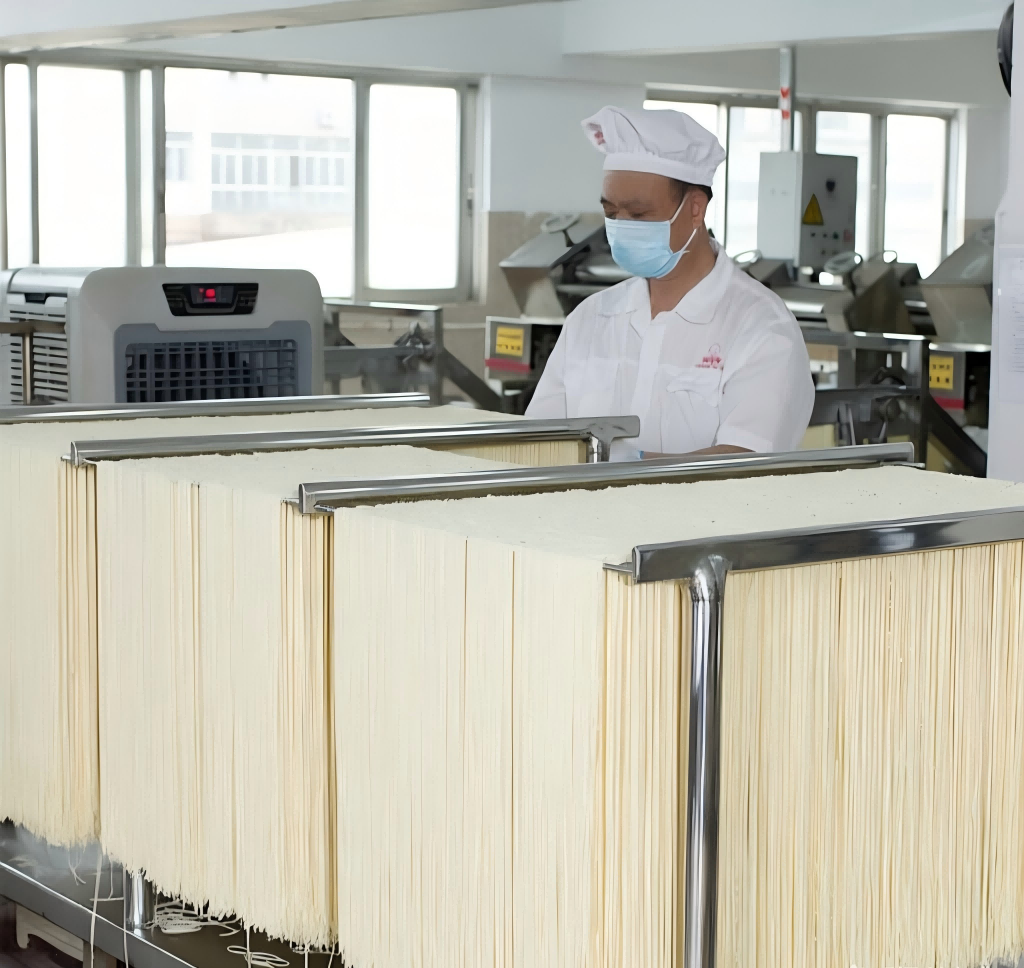
While wholesale prices for wheat and rice commodity markets vary, egg noodles and ramen noodles tend to provide the highest yield per kilogram due to their ability to expand and absorb sauce, while thicker Udon noodles tend to feel more filling per portion, which justifies smaller serving sizes. Rice noodles may have higher breakage waste during preparation.
Customization and Private Label Options Noodle factories can create customized noodles to meet the exacting standards required of restaurant chains and retailers alike, including customized thickness, width, egg content, alkalinity level and packaging size requirements. From creating proprietary ramen blends for franchisees to producing retail egg noodle cartons branded with your logo; professional manufacturers specialize in creating SKUs that distinguish your brand.
Q: Can egg noodles replace ramen? A: While you could try substituting egg noodles for alkaline ramen in stir-fries and dry noodle dishes, their chew will lack the distinctive character found in alkaline noodles. Furthermore, in soup dishes specially created for ramen soup may soften more rapidly due to rich broths designed to coat their surface and become sticky more quickly than with egg noodles.
Q: Which type of noodle is most nutritious? A: There is no single best choice when it comes to noodles--it all depends on your dietary goals and personal tastes. Rice noodles are naturally gluten-free and low in fat; Udon has low calories and fat intake but high carbohydrates. Egg noodles offer slightly more protein due to egg content; fresh ramen is moderate in calories while instant varieties could contain high sodium levels.
Q: Which noodles work best in stir-fry dishes?
A: Egg noodles are an ideal choice for stir-fry due to their smooth surface that prevents clumping while absorbing sauce evenly, while Rice noodles are essential in Thai and Vietnamese stir-fried dishes like pad thai.
Q: Which types of noodles do restaurants typically serve?
A: Restaurants select noodles according to cuisine: Chinese restaurants typically utilize egg noodles; Japanese ramen shops use alkaline ramen noodles; thick wheat udon specialists use thick wheat udon; while Vietnamese, Thai and Malaysian restaurants rely heavily on rice noodles as the basis for their dishes.
Egg noodles, ramen noodles, udon and rice noodles all play an integral part in global cuisine. Egg noodles bring versatility and richness to stir-fries and soups; Ramen offers resilient chew that epitomizes Japanese broth culture; Udon offers hearty simplicity that works beautifully with light soups or rich sauces; while rice noodles open up gluten-free Southeast Asian menu opportunities unavailable elsewhere.
Foodservice owners and buyers should make the choice that best meets their menu, kitchen workflow and customer expectations.
Call to Action: Are You Searching For Reliable Noodle Suppliers? JIANGMEN LIJI FOOD CO., LTD offers premium egg noodles, ramen noodles, udon and rice noodle products to restaurants, retailers and distributors worldwide. Reach Out Now To Request Samples or Discuss Private-Labeled Production!
Email: info@gdlijifood.com, Phone: +86 13143141923, Factory Tour at http://lijinoodles.com/Factory-Tour.html
For more information ,please cntact :info@gdlijifood.com


